
 |
||
 |
||
 |
||
 |
||
 |
||
General clips
From 2024 to 2025, I worked for U.S. Right to Know, a nonprofit organization that investigates public health issues. My work involved examining the intersection between money and politics in a sensitive area of science.
For this story, I converted the program of a major science conference into a series of datasets and found that scholarly papers on a sensitive topic -- whether neonicotinoid insecticides harm bees -- had vanished.
The research disappeared from the conference during a decade when agrochemical companies invested hundreds of thousands of dollars into the corporate partnership program of the Entomological Society of America.

As pesticide companies struggle to cap legal payouts to plaintiffs who claim they were injured by Roundup and other products, money from two political committees affiliated with major pesticide manufacturers has surged into state-level politics.
In most states, the pesticide company employee PACs contributed to a combination of legislative leaders and emerging leaders, with emphasis on legislators who chair agricultural and environmental committees.
“They’re definitely all people who are close to leadership,” said Anne Frederick, executive director of the Hawaii Alliance for Progressive Action, a nonprofit organization in Hawaii, after she reviewed the list of recipients.
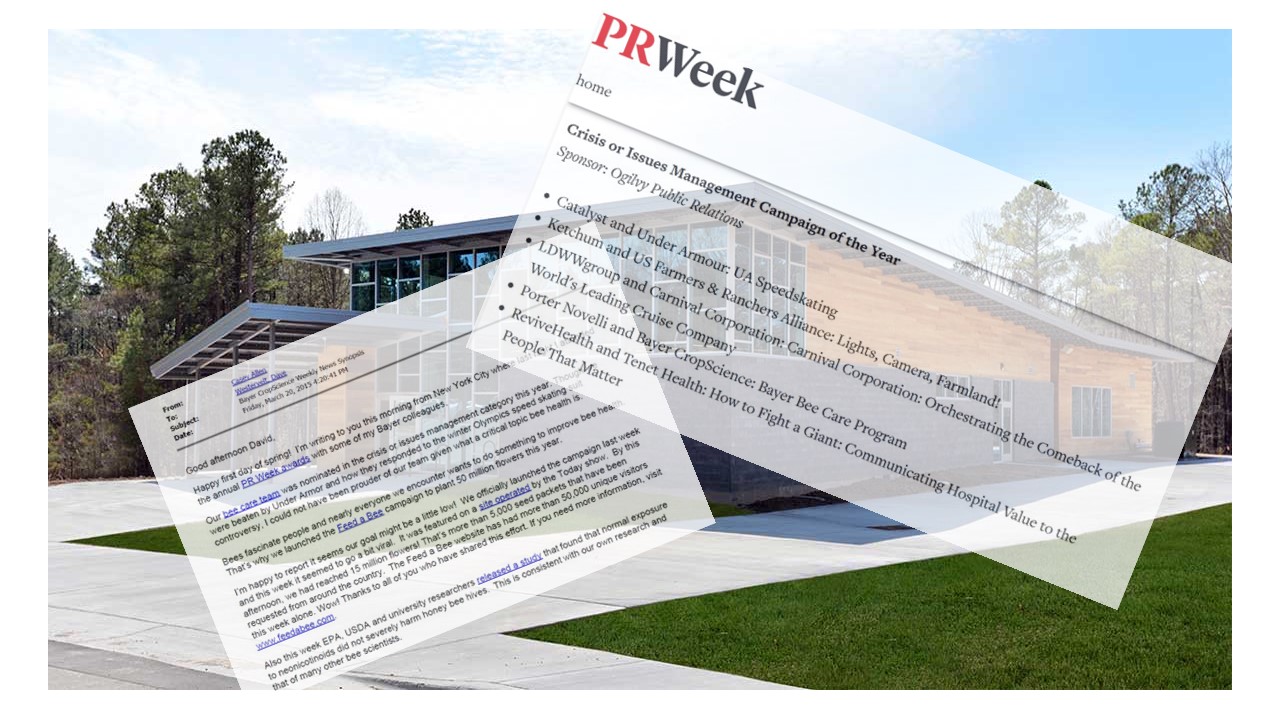
3. "Is It Science, or Crisis PR? The Strange Case of the Bayer Bee Care Team"
While I was reading through thousands of documents, I found a newsletter from a Bayer executive with a startling admission: The company's Bayer Bee Care Team, a multimillion-dollar endeavor that employed scientists, sponsored panels and pushed research into the public domain, served as crisis PR for the company during bad news about the effects of neonicotinoid pesticides on bees.
They built a building and ran tours for schoolchildren. Here's the story.
3. "After a Massive Bee Kill, a Scientist Examines Pesticide Policies"
In 2016, Judy Wu-Smart saw every sign that her career was off to a great start.
She was starting a new post as leader of the bee lab at the University of Nebraska at Lincoln. Her doctoral dissertation, on the health of queen bees, had made headlines. Her students were kicking off some intriguing new research.
Then all her bees started dying.
“We would walk into our bee yards,” she said, “and your heart would just sink.”
4. "USDA Silences Scientists After USRTK Interview Requests"
Two scientists who sought permission to speak with U.S. Right to Know were silenced last month by officials at the U.S. Department of Agriculture.
The officials gave no reason for their denials of the interviews.
In one case, a public relations specialist declined an interview after the scientist said that he was “happy to arrange a time to speak with you” in an email exchange with a reporter. In the other case, officials denied a request after the scientist submitted it to the communications department for approval.
In all, U.S. Right to Know requested interviews with seven USDA scientists on the matter, which did not relate to the scientists’ work for the federal government. Several scientists did not respond to the inquiry.
--
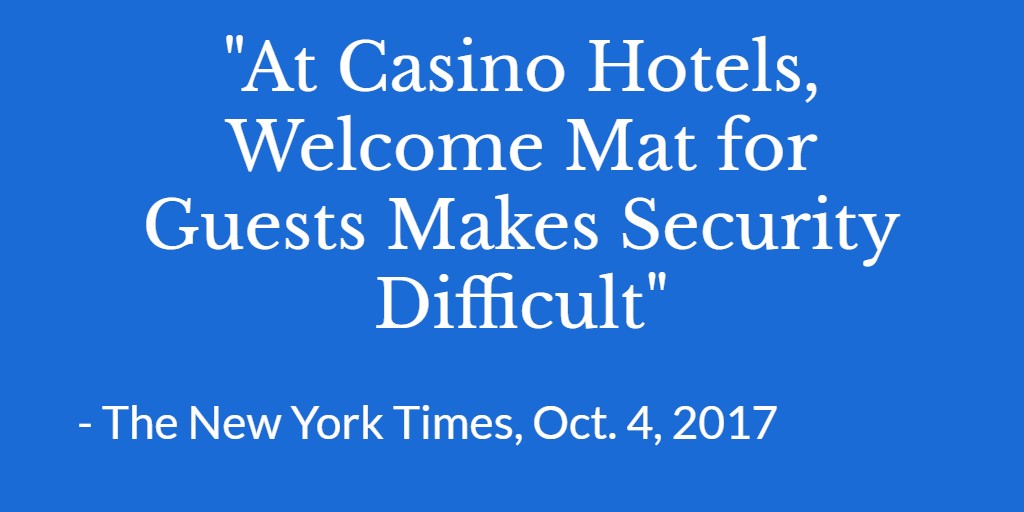
In 2017, I worked as a contributor to The New York Times' coverage of the nation's highest-casualty mass shooting in Las Vegas. The team's work was recognized as a Finalist for the Pulitzer Prize in Breaking News.
Here's the link:
Here are clips from other publications in recent years:
1. The American Association for the Advancement of Science
From 2012 to 2020, I have wrote profiles of AAAS fellows, who are some of the game-changing scientists of our time.
--
"Physicist Danny Rogers Tackles Disinformation"
When you think about online disinformation, the first sites that come to mind might be 4chan or Reddit.
If you talk to Danny Rogers, co-founder and Chief Technical Officer of the Global Disinformation Index, a very different platform comes up.
It’s Etsy – that vaunted purveyor of crafters, knitters and jewelry makers.
--
"AAAS Member Eleonora Rossi Studies How Bilingualism Makes Brains More Resilient"
Eleonora Rossi is a neurolinguist who grew up in a city with two names: Bolzano in Italian, and Bozen in German. In her hometown in northern Italy, the signs on the streets used both languages.
--
“David Gardner goes out on a limb with regeneration research”
David Gardiner fills the room as he talks about a career in the rough-and-tumble outskirts of developmental biology. He twists in an office chair and flings his arms for emphasis. It's a good thing the desk is clear, or he would sweep it clean in no time.
He recalls a comment that came back from peer review on one of many papers he co-authored with his wife, AAAS Fellow Sue Bryant.
"It said, 'I'm tired of this iconoclastic view from Gardiner and Bryant,' " said Gardiner. "And it took me a while to realize that this wasn’t a compliment."
2. The New York Times
“Vignettes of Black Friday: Life in the Slow Lane”
The New York Times, Nov. 22, 2012
Not far from the frantic crush of local malls, the merchants of downtown Upland, Calif., quietly rolled a few racks of merchandise out to the sidewalks under the bright sun of an 80-degree day. They stood back and waited.
At 10 a.m., a few shoppers started to stroll through town. But it was hardly a hotbed of consumer activity.
--
"National Perspectives: On the Block in California"
The New York Times, June 10, 2007
RIVERSIDE, Calif. -- On a foggy Sunday morning last month, the parking lots around the convention center here were filling fast.
The volume of the traffic downtown was not unusual. What was unusual was that the men directing the traffic were wearing tuxedoes.
The crowd — about 1,200 people looking for deep discounts in real estate — was decidedly less formal, in jeans and Dockers, shorts and sandals. The casual dress code concealed the fact that many were serious buyers carrying millions of dollars collectively into the hall in cash and cashier's checks.
They converged on an event the likes of which Californians have not seen in a decade: a large-scale auction of foreclosed homes.
--
"Model Homes and Model 'Families' "
The New York Times, June 18, 2006
SANTA CLARITA, Calif. -- FORTY miles north of Los Angeles, in an area where hundreds of homes are cropping up among the brushy, treeless hills, several dozen buyers recently found an odd spectacle in a new housing development.
To visitors, at first glance, it was like walking into a domestic scene starring Colin Farrell and Cameron Diaz.
As shoppers stepped through the front door of the largest model home, a barefoot affable man in his 30's shouted hello from the kitchen and offered juice to the buyers' children. His "wife" — slim, blonde and agreeable — pressed them to try some fresh-baked cookies. Their "children," 12 and 14, offered to show the visitors their rooms. A birthday card was propped on the mantel, and a chocolate layer cake with blown-out candles sat on the speckled granite countertop.
In truth, this cheerful family of four was a group of professional actors — paid to show buyers how life could be in the house, which is one of 166 units planned by Centex Homes of Dallas.
--
"E-Mail Finds the Rare Ear in Congress"
The New York Times, Dec. 13, 2001
IN THEORY, e-mail should be a useful tool for democracy, an easy and prompt way for citizens to reach their representatives. And with the fear and disruption resulting from the discovery of anthrax in Congressional mail, e-mail might seem an ideal alternative.
But although many members of Congress asked constituents to switch to e-mail after mail delivery to their offices was halted in October, the trend on Capitol Hill seems to be a backlash against the medium.
--
3. Discovery Communications
In 2010 and 2011, I got to write on a range of fun topics for Web sites of the Discovery Channel.
"10 Things You Didn't Know About the History of Smoking"
Few things in life truly become universal human experiences, but smoking earned that title without much trouble at all.
The story comes up again and again: A trader, usually an English trader, sets foot in a new land. He lights up with the locals, and he just can't stop. He gets a bag of the stuff and he takes it with him. In the spirit of friendship, he shares it with everyone he meets. Economies are created, and societies are changed. And it's all for the sake of a little smoke.
--
"Top 10 Appliances Most Americans No Longer Use"
Appliances make our lives more convenient, and it's no surprise that people want to buy machines that take some of the work out of our daily routine. However, you may be surprised to learn that the politics of the early 20th century created big markets for new gas and electric appliances.
--
4. The Daily Report/Progress Bulletin
"Police Crack Down on Crack With Operation Hot Spots"
The Daily Report/Progress Bulletin (Ontario, Calif.), Feb. 4, 1990
IT'S 8 O'CLOCK on a Saturday night, and the drug trade is hopping in Pomona. The dealers know it. The buyers know it. The cops know it.
Twenty officers are out tonight in plain white cars. They aren't waiting for calls to come in; they're looking for trouble in the worst parts of the city.
Mailing address: 112 Harvard Ave., #134, Claremont, CA 91711